Parallel CI Architecture for Agent-Saturated Pipelines
Parallel validation lanes and flake containment replace serial queues when agents flood CI.
Parallel CI architecture for agent-saturated pipelines makes validation parallel, ephemeral, and queue-aware, which takes more than speeding up a human-paced workflow. Its central requirement is coordination between isolation, scheduling, flake tolerance, and compute capacity. More runners help only when the architecture lets them perform useful validation without multiplying interference or retries.
Why agent-saturated pipelines break CI in a way that more runners alone cannot fix
Writing code is no longer the dominant constraint in an agent-saturated software factory. Validating candidate states of main is the constraint. Agents increase the supply of changes, but test duration, runner capacity, flake rate, and merge-queue mechanics do not accelerate with them. A strictly ordered queue with a 30-minute CI run can validate at most two PRs per hour. A 50-person team that produces two PRs per developer-day already sends more than that queue can handle, even before agents send changes at a faster rate.
Anthropic reported that its CI job volume increased 25x over 6 months. That measure of CI jobs establishes the scale of the capacity mismatch. As arrivals approach service capacity, queueing delays grow nonlinearly. Additional runners increase throughput only where validation can run concurrently, while queue dependencies and repeated flaky failures can still prevent that concurrency from producing successful merges.
How flaky tests become a denial-of-service attack at agent frequency
A flaky test fails probabilistically rather than consistently identifying a defect in the change under review. At human PR frequency, an occasional wasted run may be tolerable. Persistent agent retries change the operational effect. An agent instructed to “get the PR merged” can repeatedly re-queue the same change, consuming a full CI run on every attempt. When those attempts retrigger validation for changes behind it, one unreliable test becomes a queue-wide denial-of-service mechanism.
The cause is retry amplification. The same flake rate produces more wasted validation as agents submit and retry more frequently, so a small reliability problem can occupy capacity needed by unrelated changes. CodeRabbit found roughly 1.7x more issues in AI-generated PRs than in human-only PRs, which adds a separate source of failures for validation to absorb. That finding does not explain probabilistic test failure. Real regressions and flaky failures require different handling, because spending more compute on the latter can crowd out the work needed to detect the former.
The two distinct parallelization problems of agent work isolation and CI validation isolation
Agent-side parallelization protects concurrent work before it reaches integration. Its constraints include human attention, context management, and compute. Agents that share a directory can overwrite each other’s changes. Git worktrees address that filesystem collision by giving each agent a separate checkout and branch while sharing the same.git history. Data and service isolation require separate provisions, including schema-per-feature in Postgres or separate SQLite files, together with port namespacing.
Independent work with no shared state parallelizes cheaply, while changes to shared modules such as auth or billing incur coordination overhead. CI-side parallelization addresses a different boundary entirely. It determines how many candidate states of main can be validated per hour through isolated test environments and queue-aware scheduling. More worktrees can therefore accelerate PR production without improving integration throughput. Codacy’s 2026 analysis identifies consistent automated checks across parallel streams as more important than an individual engineer’s ability to track multiple sessions, which places the integration burden on a uniform validation system.
How footprint-aware queue design replaces strict serialization without sacrificing safety
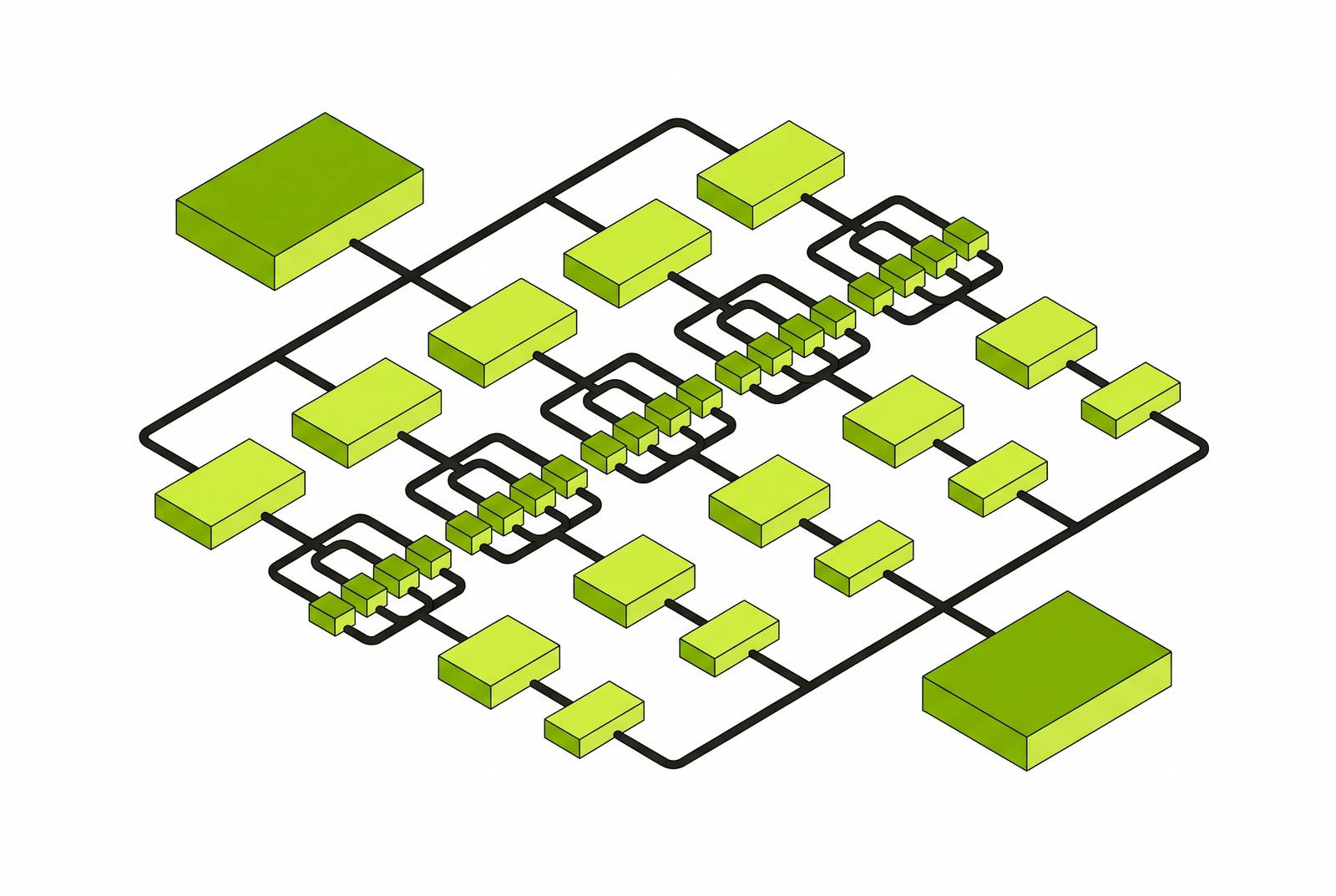
A strictly serial merge queue uses ordering as a conservative proxy for safety. It avoids interference but also excludes independent work. Footprint-aware scheduling instead identifies which changes can invalidate each other and reserves serialization for those relationships. Changes with disjoint footprints can occupy parallel validation lanes without relaxing the checks each change must pass.
Base Power Company provides a concrete example of this design. The company brought end-to-end suites traditionally run post-merge, nightly, or before release into the pre-merge gate, so parallel validation faced the same bar as production. Its implementation was deliberately focused, consisting of one Go service, roughly 16,000 lines, a React dashboard, and Postgres for state. That scope makes the queue a replaceable service within the CI system. Although exact footprint analysis is difficult, coarse boundaries such as touched file paths and crossed module boundaries can capture much of the available parallelism without requiring perfect analysis.
Ephemeral, isolated environments as the prerequisite for parallel CI lanes
Dependency analysis cannot create concurrency when validation still shares mutable infrastructure. Two PRs may touch independent code but still be unable to run tests at the same time because they use the same environment. The infrastructure then imposes the serialization requirement. A better scheduling algorithm alone cannot stop the tests from competing for that environment. Per-PR environments remove the shared-environment constraint so that code dependencies, rather than infrastructure occupancy, determine which changes can validate together.
An ephemeral environment is created for a PR and torn down after validation. Its isolation must extend beyond the checkout to the data and services used by the tests. The corresponding provisions include filesystem separation, a schema or instance per branch, and port namespacing or container isolation. Startup time becomes a new latency variable. The design target is provisioning that finishes faster than the test suite runs, preventing environment creation from becoming the dominant delay as the queue opens more lanes. This is a specific requirement for safe validation concurrency.
Designing flake tolerance into the validation architecture rather than patching it afterward
The architectural response to flake is to contain its effect before it reaches the full queue. A targeted rerun uses less shared capacity than restarting CI. For a test with documented flaky behavior, a single failure should trigger that narrower response rather than immediately blocking every dependent change. Test-result history helps tell a new failure that may point to a regression from a pattern that keeps coming back with known flake. The distinction supports different routing without treating every failure as harmless.
Flake budgets make that containment enforceable over time. Each test receives a budget within a rolling window, and exceeding it triggers automatic quarantine and human review. This keeps an unreliable test from using up queue capacity with no end in sight. Base Power’s pre-merge end-to-end gate makes such containment especially important, because moving broader suites earlier also moves their flake into the merge path. Agent transcript analysis provides a complementary remediation signal by showing which skills or tool calls repeatedly encounter the same failing path. That feedback helps teams fix the tests so they can leave quarantine and run reliably again.
Queue mechanics that are built for agent arrival patterns, not human ones
Agent-aware scheduling must account for bursts of PRs. Compatible changes with disjoint footprints and the same target branch can be batched into a single validation run, reducing per-PR overhead. If a batch passes, its changes can merge together, but if it fails, each change needs to be checked on its own.
Admission and priority decisions control which work receives that capacity. Footprint size, test coverage of changed paths, and agent-reported confidence can inform risk classification, allowing small, low-risk changes to advance while higher-risk arrivals are deprioritized or rate-limited. Retry traffic needs its own explicit policy. Exponential backoff, a maximum retry count, and escalation to human review stop persistence from becoming unlimited demand. Agents should also receive a version of the validation command without the actual merge step, so they can detect and fix failures before entering the shared queue.
Runner capacity planning for a pipeline where PR volume can spike by an order of magnitude overnight
A pool sized for average demand starves the queue during bursts, while one sized permanently for peak demand leaves expensive capacity idle at baseline. The 25x job-volume increase illustrates why historical human load is an inadequate planning anchor. Capacity planning must accommodate the freedom to start more agents, even though the documented increase occurred over months.
Queue depth is the appropriate autoscaling signal because pending validation jobs express unmet demand more directly than current CPU utilization. If runners arrive too slowly, provisioning latency sets the starvation window even when eventual capacity is sufficient. Retryable validation can use cheaper spot or preemptible instances, with low-priority work routed there and on-demand capacity reserved for high-priority or human-authored changes. This adds operational complexity, but managing elastic runners is a fixed investment against recurring queue starvation. Its benefit depends on scaling useful work and controlling the population of retries.
Why composable, purpose-built validation tooling outperforms monolithic CI platforms at agent scale
Footprint scheduling, environment provisioning, flake tracking, and runner allocation have different failure modes and tuning needs. A platform that owns all of them can make independent improvement harder. General-purpose CI platforms were built around a human pushing code, a pipeline running, and a person reading the result. Under agent load, the queue and the infrastructure that supports it need to be treated as first-class systems, with more care than peripheral features receive. Their interfaces must let teams replace them without moving the whole pipeline.
The CNCF describes Platform Engineering 2.0 as “composable by design,” with modular, independently deployable, API-first capabilities that can be swapped without cascading changes. Base Power’s focused queue service illustrates that principle in validation. A single platform can reduce integration overhead and vendor count, but those savings must be weighed against the work of forcing unsuitable abstractions to handle queue starvation or flake cascades. An agentic merge queue, agent transcript analysis, and high-performance code storage are composable layers that can help near that boundary, and teams can choose them separately.
The structural checklist for parallel CI architecture in agent-saturated pipelines
A platform team’s acceptance criteria should cover how the layers work together as well as whether each component is in place. A parallel lane is useful only if its footprint decision is backed by an isolated environment and available compute. A pre-merge end-to-end gate is sustainable only if known flake has bounded access to queue capacity. Agent admission must likewise account for both new work and retries, because elastic capacity cannot compensate economically for uncontrolled amplification.
Implementation can still proceed in stages. A team that begins with footprint-aware batching and adds ephemeral environments six months later is moving toward the architecture. Each layer can improve on its own while its interfaces keep the checks consistent across every parallel stream. The limit is the codebase itself. Poor service boundaries, tight coupling, and inadequate test coverage remain software-design problems that agents and parallel CI do not repair. Building the architecture with care pays off because its parts help one another, while fixing one piece at a time leaves the next shared constraint able to eat up every gain in throughput.