Composable Infrastructure vs Hyper-Converged Infrastructure for Dev Platforms
Composable infrastructure scales individual resources; HCI scales whole nodes together.
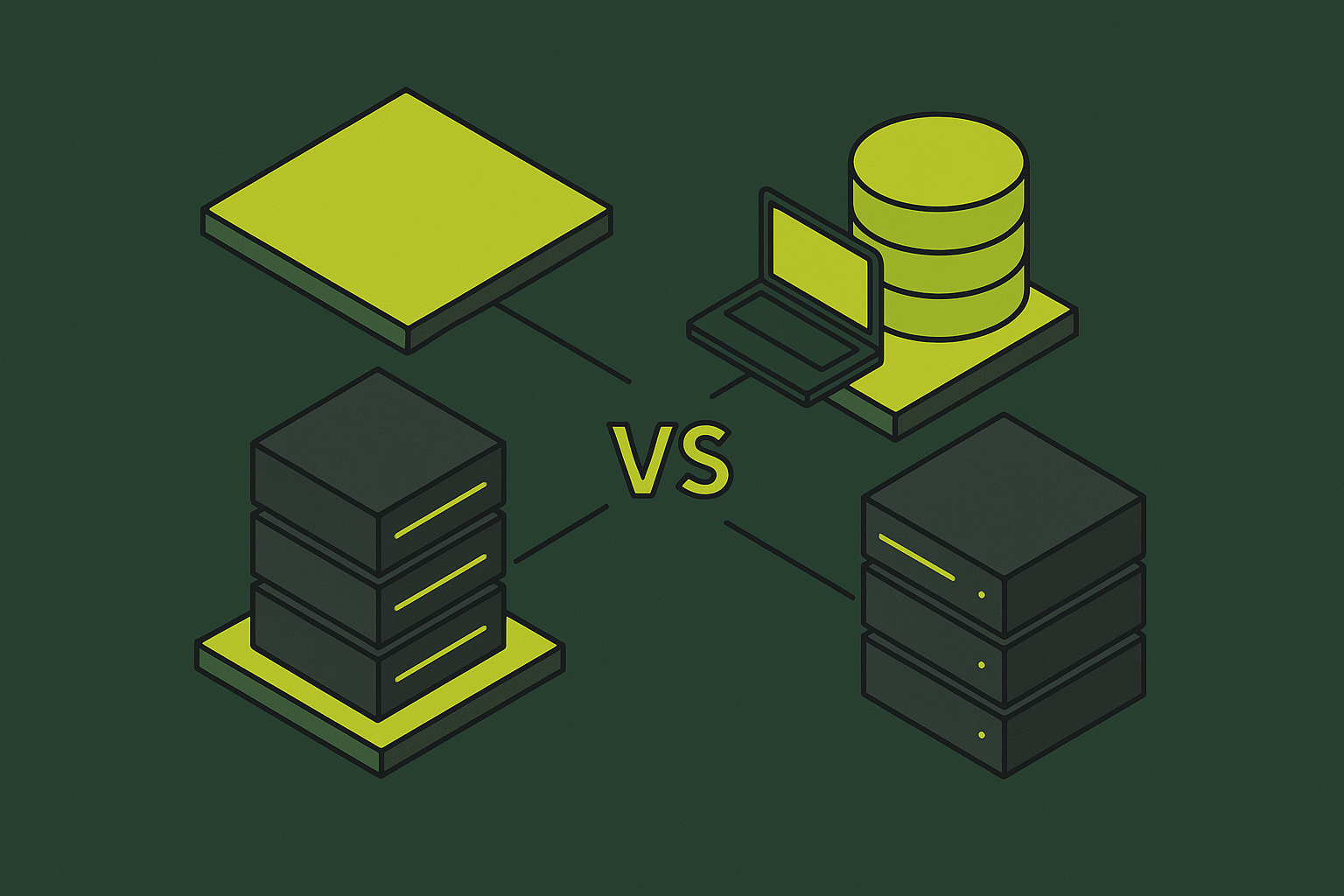
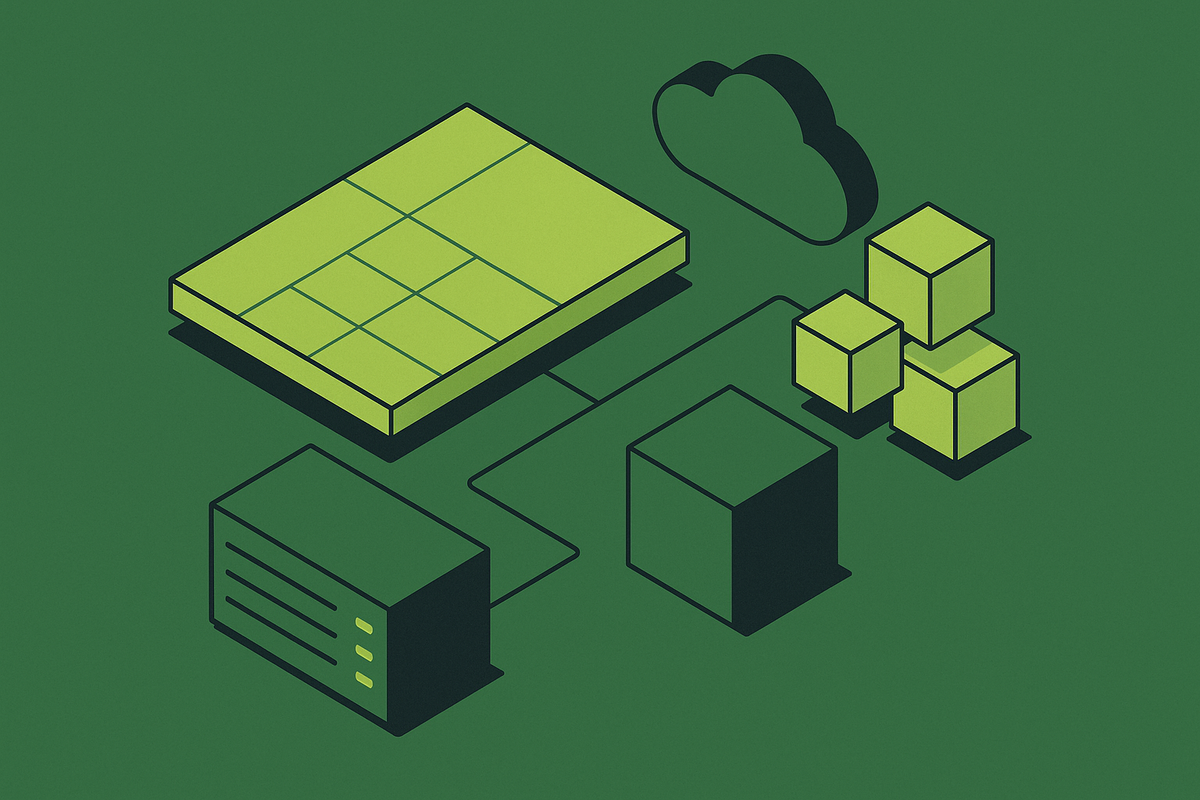
Composable infrastructure and hyper-converged infrastructure (HCI) both let teams pool compute, storage, and network resources instead of buying siloed hardware. But they pull in opposite directions. HCI bundles those three resources together at the node level and scales them as a unit. Composable infrastructure pulls them apart into separate pools and lets software call each one up on demand. For a developer platform running agentic, cloud-native pipelines, that difference decides whether the hardware underneath a fleet of coding agents can keep pace with how those agents actually eat resources. Most teams evaluating the two treat it as a matter of taste, and that's the wrong question to ask.
Converged infrastructure is the common ancestor of both. Vendors preconfigure and validate a hardware stack, which cuts down on the compatibility headaches that used to consume significant time for a systems team. The tradeoff is a shape locked in at deployment that's hard to change later. HCI took that idea and put a software-defined layer on top of commodity nodes, tying compute, storage, and network together under a hypervisor and running the whole thing from one console. Scaling means adding another node, full stop. You get more of all three resources whether you need them or not.
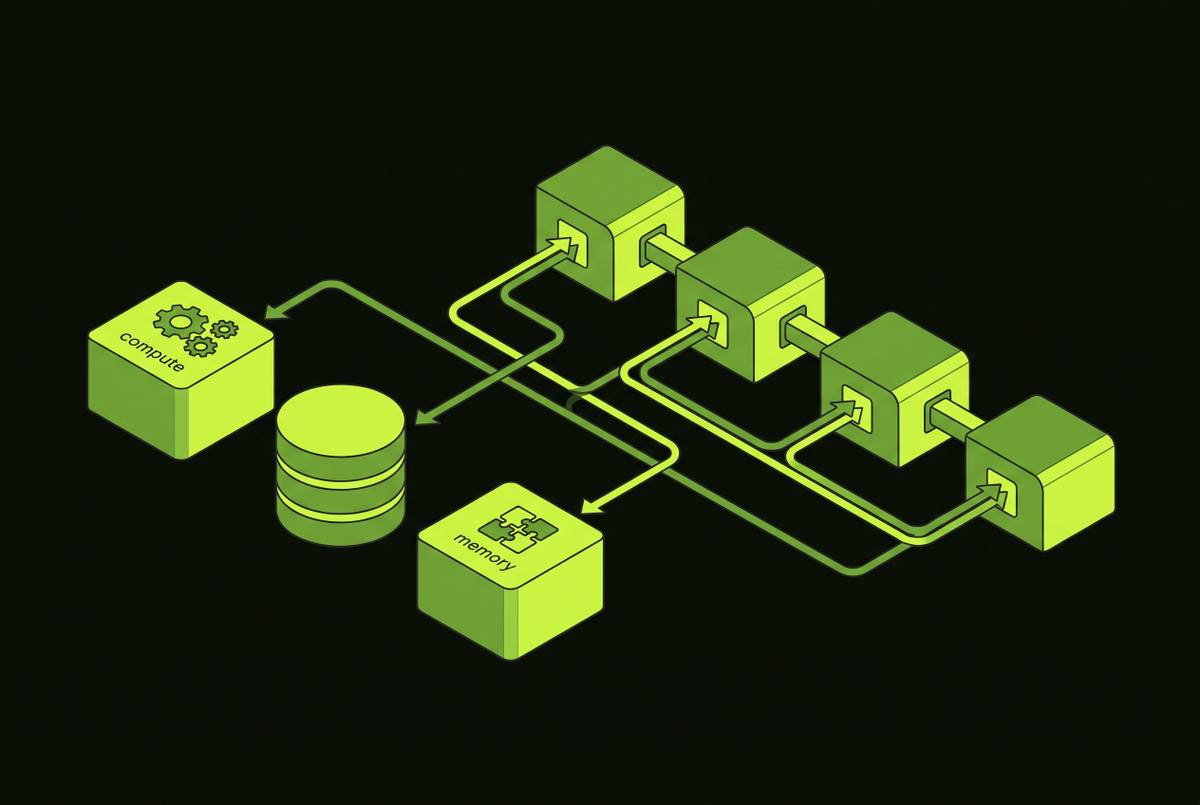
Composable infrastructure breaks that bundle apart. The same three resource types get split into logical pools and exposed as objects an API can call. A workload gets exactly the processing power, storage, or network it needs, sized to the job rather than to the boundary of a physical node. The industry sometimes uses "composable" as a stand-in for infrastructure-as-code or software-defined infrastructure in general, and that sloppy habit should be corrected. Composable infrastructure builds on both ideas by adding programmatic control on top of pooled physical hardware; it doesn't replace either one.
Where HCI coupling becomes a structural constraint
Linear scaling is HCI's defining feature and its ceiling at the same time. Every node you add brings compute, storage, and network along together, with no way to grow just one dimension. That forces overprovisioning as the default state of affairs: whichever resource isn't under pressure sits idle while the one that is gets saturated. Most HCI deployments also hit a scale ceiling well short of what a large enterprise workload might demand, and once growth speeds up, that ceiling turns from a planning inconvenience into a wall.
The hypervisor dependency makes it worse. Every node in an HCI cluster needs a hypervisor license, so workloads that would run faster on bare metal pay for that layer anyway, in dollars and in latency. Add vendor minimum node counts and proprietary management stacks on top, and the economics of scaling at the margin get worse, not better. CPU-heavy workloads show the mismatch clearest: paying hypervisor tax on a node when the job just needs raw compute is the whole problem in miniature. Big-data and analytics pipelines hit the same wall from the storage side, since capacity can't grow apart from compute no matter how lopsided the actual demand gets.
The market has already conceded the point. Dell PowerFlex, NetApp HCI, and HPE Alletra all built disaggregated HCI (dHCI) specifically to decouple storage nodes from compute nodes, and a fix like that occurs in response to a real problem already hit, not a hypothetical one. HPE went further, folding its Composable Fabric software-defined networking into the SimpliVity HCI stack: an HCI vendor borrowing design principles straight from the composable side of the fence. That's a decent signal of where the ground is moving.
The gains and costs of composable infrastructure
The gain is granularity. Instead of adding whole nodes, a team adds the individual piece it's actually short on: CPUs, NVMe SSDs, GPUs, NICs, FPGAs. Utilization across the data center improves because each pool gets sized to what it's for, matching capacity to actual need rather than to whatever a vendor's node configuration happened to bundle together. Provisioning runs through APIs and policies instead of a console: a developer or a pipeline defines what a workload needs, and the infrastructure builds itself around that definition. That's what lets composable infrastructure slot naturally into pipeline-driven, programmatic workflows, rather than needing a human to click through a management screen every time demand shifts.
Composable platforms also don't force a hypervisor on you. Applications run bare metal, in VMs, or in containers, and the workload picks the deployment model instead of the infrastructure model picking it for the workload. For compute-heavy jobs, that alone strips out a real chunk of licensing and performance overhead.
None of this comes free, and pretending otherwise does the argument no favors. Composable infrastructure is younger and less battle-tested than HCI, the operational skill needed to run it well is higher, and the tooling hasn't caught up to HCI's maturity yet. For a stable, general-purpose workload, HCI still wins: fast, predictable deployment cuts operational overhead more than fine-grained control would. Composable infrastructure isn't a universal upgrade. It fits a specific demand profile well and fits everything else poorly, and the honest answer to "which one should we buy" depends entirely on which profile you're running. Anyone selling composable infrastructure as the automatic successor to HCI is skipping past that qualifier on purpose.
A handful of vendors define the current market. HPE Synergy, rated 9 out of 10 across six reviews on TrustRadius, treats IT resources as a service composed and deployed to applications in near real time. Fungible's DPU Platform, rated 8.2 out of 10, targets hyperdisaggregation of compute and storage across data centers using purpose-built data processing units. Liqid's Composable Infrastructure platform pairs its Command Center software with composable hardware to configure bare-metal server systems rapidly, and TechTarget research separately lists Liqid alongside HPE as among the most prominent names in the category. Lenovo's ThinkAgile CP Series, rated 7.2 out of 10, brings composable infrastructure to private cloud through its CP4000 and CP6000 models. NVIDIA's BlueField DPU platform offloads and speeds up networking, storage, and security services across environments. Western Digital's OpenFlex uses NVMe-over-Fabric to disaggregate compute and storage for better utilization and agility.
How agentic software development changes the infrastructure demand profile
Forrester's report on the state of agentic software development describes a shift infrastructure planners can't ignore: AI coding tools have stopped being assistants embedded in one person's workflow and started acting as independent agents working across the entire software development lifecycle. End-to-end automation is becoming the norm. The adoption curve backs this up. An analysis of more than 129,000 public GitHub projects found that between 16% and 23% had already worked agentic coding tools into their pipeline within months of those tools reaching general availability, across projects of every maturity level and language.
What these agents actually do eats infrastructure by nature. They write code, open pull requests, run CI pipelines, navigate large codebases, build features, and submit PRs, often across sessions running from a few minutes to several days, with checkpointing and self-healing built in to survive interruptions. That's a fundamentally different consumption pattern than a human developer clicking "build" a few times a day.
Forrester's report also flags a bottleneck-shift problem: coding throughput might improve 30% to 40% with AI help, but if planning, testing, and release stay manual, overall team output often rises by less than 10%. The bottleneck doesn't disappear, it just moves further down the pipeline. Pointing agentic tools only at code generation, while leaving the rest of the pipeline's infrastructure untouched, reproduces exactly the coupling that HCI has, where components are tied together and local optimization never turns into gains across the whole system.
Agents need things from infrastructure that human developers mostly didn't: support for long-running sessions, resource provisioning triggered by API calls instead of tickets, storage that can absorb high-throughput code access, and the ability to recover from short-lived failures without paging a human. The pattern that emerges across teams is direct: the teams getting the most out of agentic coding aren't the ones spending the most on frontier models. They're the ones running disciplined workflows on top of infrastructure built to support them. Research tracked on arxiv projects a maturity curve for this shift, with agents owning complete tasks from specification through deployment as the near-term horizon. Each stage raises the throughput demand on whatever pipeline infrastructure sits underneath.
The specific bottlenecks the rigid coupling in HCI creates for software factory workloads
Variable demand is the normal condition for a software factory, not an edge case. CI/CD pipelines spike compute hard during test runs and then go quiet. Code storage access is bursty and driven by agent activity rather than the steadier, human-paced rhythm HCI was built around. Neither pattern fits a model that scales in fixed, linear node increments.
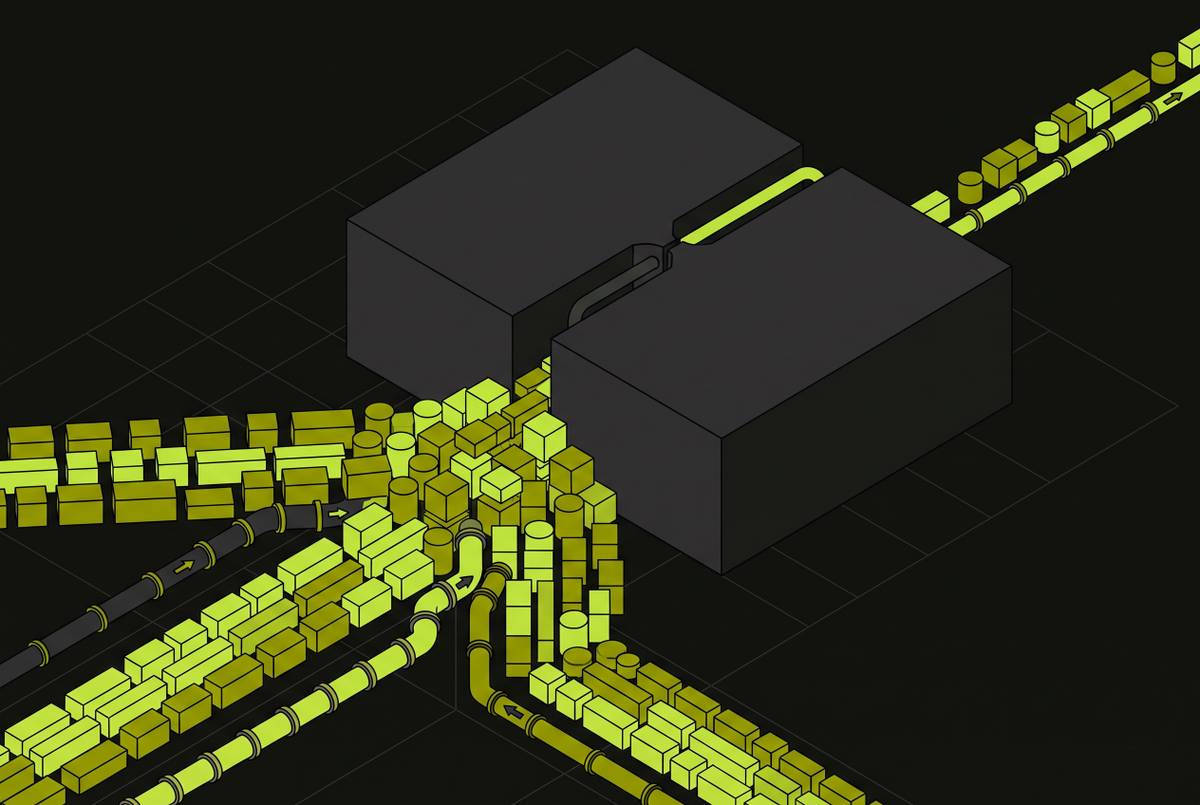
The inability to pull resources apart bites hardest exactly where AI agents create high concurrency. Running dozens of agent sessions in parallel taxes compute without a matching bump in storage need, and HCI's only answer to that mismatch is to overprovision whatever dimension is sitting idle, because there's no other option on the table. Hypervisor overhead adds a second cost on top of that: test runners, code indexing jobs, and merge queue execution all run better on bare metal, and HCI's mandatory hypervisor layer gets in the way of exactly the pipeline stages where speed matters most.
Then there's the ceiling. An HCI cluster that tops out at a modest node count becomes a hard limit once agent-driven pipelines start multiplying concurrent sessions, and the same scale problem that already frustrates big-data workloads occurs here in a different costume. Vendor lock-in makes this worse: a team that wants to add GPU capacity for AI inference or NVMe storage for a growing code repository can't do it piece by piece. It has to buy and license a full additional node just to get the one resource it actually needs.
dHCI offerings from Dell, NetApp, and HPE solve part of this by decoupling compute and storage nodes, but that's a partial fix, not a real one. Resources still aren't exposed as objects an API can call, so pipeline automation still can't provision infrastructure in direct response to a workload signal. It can only ask a human to go add a node. HCI, in its original form and in its disaggregated variants, was built for human-paced IT operations. Software factories don't run at that pace anymore. They need infrastructure that answers to API calls directly.
Composable infrastructure's fit with the software factory model above the hardware layer
API-driven provisioning is the natural match for pipeline automation. When infrastructure exposes compute, storage, and network as objects that respond to API calls, a CI/CD orchestrator or an agent harness can request what a given workload stage needs, without a manual step or padding for safety margin. That's what makes composable infrastructure a first-class part of an agentic workflow instead of a bolt-on: the APIs slot directly into the pipeline instead of sitting beside it.
Independent scaling of compute and storage matches how software factories actually behave: spin up GPU capacity for a wave of parallel agent sessions, then scale storage on its own schedule as code repositories grow. The bare-metal option matters most for the pipeline stages where latency counts: test runners, code indexing engines, merge queue processing. Long-running agent sessions, which stretch from minutes to several days and depend on checkpointing to survive interruptions, need infrastructure that's stable and resumable in a way node-level HCI allocation just isn't built to provide.
But composable hardware only solves half the problem, and treating it as the whole answer is where a lot of infrastructure planning goes wrong. Flexible hardware doesn't turn itself into a productive software factory. That still takes purpose-built work above the hardware layer: agent harness design, merge queue management, transcript analysis, and a way to feed production signals back into the system. The same principle that governs the hardware choice applies again one layer up. Composability beats monolithic coupling whether you're talking about racks of NVMe drives or a stack of software capabilities: assembling just what a workload needs consistently beats forcing every job through one general-purpose platform. Specification-driven development adds one more wrinkle. As workflows move toward a chain of requirements, specification, AI generation, and validation, generated-code workflows start needing infrastructure with performance characteristics and access patterns of their own, distinct from the human-edit workflows infrastructure was originally built around.
Harness engineering as the software-layer equivalent of composable infrastructure design
The term "harness engineering" traces to a blog post by Mitchell Hashimoto, HashiCorp's co-founder and the creator of Terraform, published in early February 2026, and it was formalized shortly after in an OpenAI post by Ryan Lopopolo on February 11, 2026. Hashimoto's framing of the core idea is blunt: anytime an agent makes a mistake, the fix is to engineer a solution so the agent never makes that mistake again. That's a systematic discipline, not a round of prompt tweaking, and treating it as the latter is how teams end up rebuilding the same fix three times.
The production harness Hashimoto describes has five layers: tool orchestration, verification loops, context and memory, guardrails, and observability. Each one is a discrete, composable piece rather than a single monolithic block, which is the same design logic composable infrastructure applies to hardware. The distinction that matters most is deterministic versus probabilistic control. Telling an agent in a prompt to follow coding standards relies on the model choosing to comply. Wiring a linter that blocks the pull request removes the choice. Harness engineering formalizes that difference, and it's the reason a composable, layered harness beats piling more instructions into a prompt every time.
Skipping this work raises costs in production, not in theory. Apiiro's analysis found AI-generated code introduced more than 10,000 new security findings per month by June 2025 across the repositories studied, a tenfold jump from December 2024. That's a direct, measured cost of running agents without a harness layer to catch what they get wrong.
Harness quality, not model quality, is turning out to be the bigger performance lever, and that should reorder where engineering budgets go in 2026. On Terminal-Bench 2.0, Letta's memory-centric architecture is designed to outperform thinner agents on the same underlying model. The gap comes down to memory architecture: Letta runs on a durable memory substrate, while Claude Code uses a file-based, project-scoped memory system rather than persistent memory across projects. Same model, different harness, a nearly 18-point spread in outcome. That gap alone should settle the debate over where the next round of engineering hours belongs.
Harness engineering is emerging as the third phase of this discipline, after prompt engineering and then context engineering, and it looks to be where most engineering investment is in 2026. Spotify's Honk system is a working example at scale: since mid-2024 it has merged more than 1,500 AI-generated pull requests across hundreds of repositories, with verification loops doing the work of keeping that volume reliable.
Transcript analysis and observability as the feedback loop that keeps composable agent systems tuned
A closed quality loop is forming around agent operations. Agent runs generate traces, those traces get evaluated, anomalies get flagged, humans review the failures worth their time, the important traces turn into training or eval datasets, and the next evaluation cycle starts from a stronger baseline. Each pass narrows the gap between what the agent can do and what the harness is actually built to support.
The cycle-time gains from doing this well are concrete. Finom, a European fintech serving more than 125,000 small and midsize businesses, cut its agent improvement cycle from 10 days down to 3 hours after adopting Confident AI's agent observability tooling. That's a change in how fast a team can find a failure mode and close it for good, representing a substantial efficiency gain.
Transcript analysis reveals things a dashboard simply can't: which skills an agent is actually reaching for, which ones are dead weight nobody uses, where context is getting wasted on irrelevant information, where a verification loop is failing quietly instead of raising an alarm. A verification loop that fails silently is worse than having no verification loop at all, because silence produces false confidence, and false confidence is harder to catch than an obvious gap.
Skill bloat is the software-layer version of the overprovisioning HCI has at the hardware layer. A well-built composable harness lets a team strip out unused skills the same way composable infrastructure lets a team drop unused resource allocations, and both disciplines rest on the same conviction: dead weight drags down performance whether it's sitting in a rack or sitting in a prompt. Benchmarks like AgentBench, Terminal-Bench 2.0, WebArena, and SWE-bench Verified give the field independent, if scattered, reference points for correctness and efficiency, and the NIST AI Agent Standards Initiative, launched February 17, 2026, runs as its own federal standards effort alongside them rather than folding into one shared framework. Composable infrastructure gives a software factory the hardware substrate that can flex with agent demand. Harness engineering and the observability loop built on top of it decide whether that flexibility ever turns into output anyone can trust.
Sources
- Best Composable Infrastructure 2026 | TrustRadius
- Everything you need to know about composable infrastructure | TechTarget
- HCI vs. traditional IT vs. dHCI vs. composable infrastructure | TechTarget
- Composable architecture options versus CI and HCI | TechTarget
- Harness Engineering for AI Coding Agents: Constraints That Ship Reliable Code
- techtarget.com
- techtarget.com