Jenkins Build Triggers in Agent-Automated CI Pipelines
Agents need trigger controls that deduplicate pushes, bound retries, and preserve validation gates.
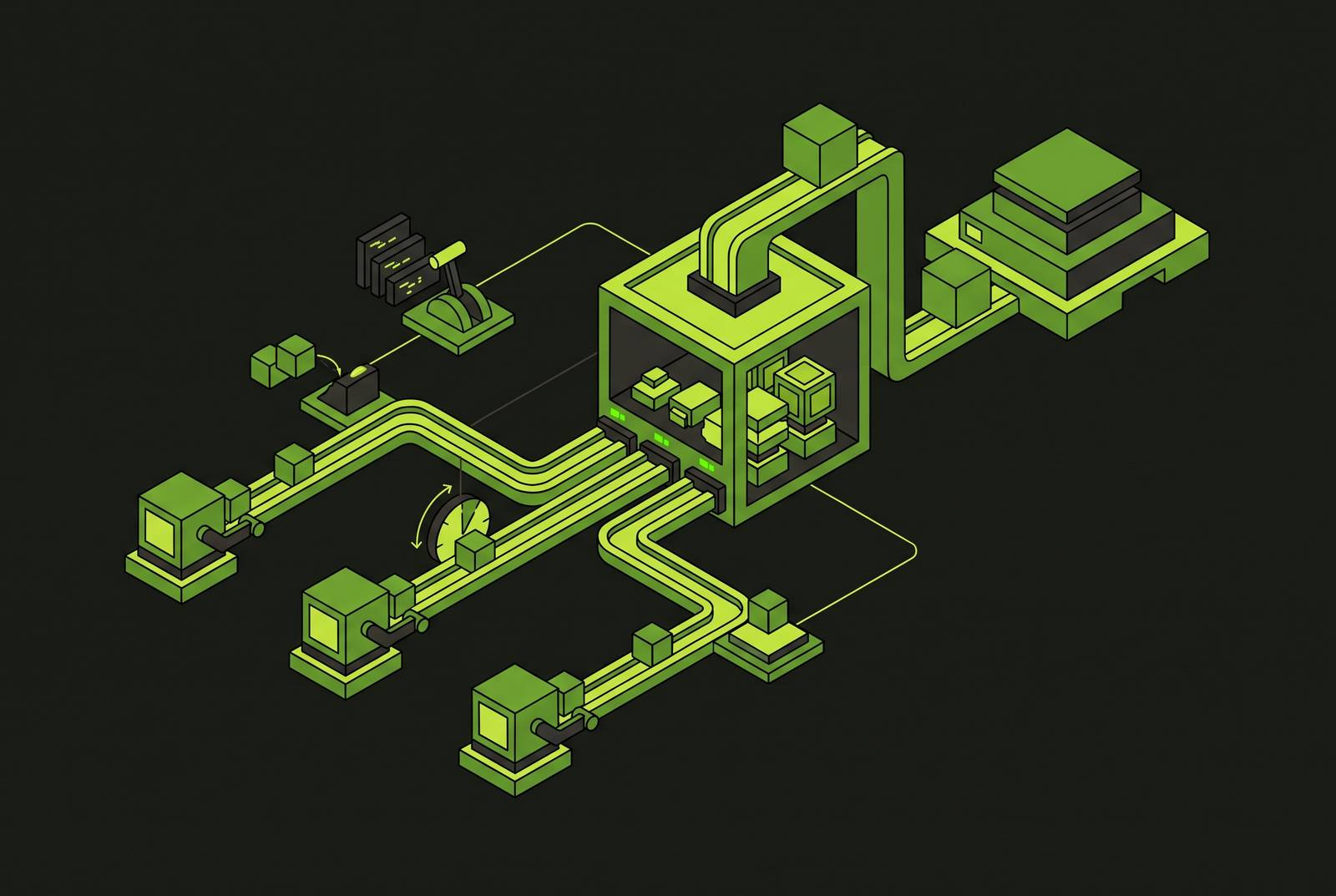
Jenkins build triggers in agent-automated CI pipelines need to control more than when a build starts. They must turn machine-paced pushes and retries into distinct, useful validation runs. Filtering events, bounding retries, preserving governance gates, and returning structured failure signals lets agents act on evidence and limits redundant builds.
Why the assumptions built into Jenkins triggers made sense for human developers and stop making sense for agents
The traditional Jenkins workflow gives a human responsibility for interpreting the build result. A developer pushes a branch, a webhook fires, and a build runs. The developer then decides whether failure calls for another change, another run, or investigation. That pause is part of the operating model. Poll intervals and webhook debounce windows assume minutes between commits, while approval gates assume that the person pushing code can wait.
Jenkins’s 2026 assessment describes agentic systems that can take on larger tasks, refactor code, open pull requests, and try to fix defects with less hands-on help. Their work can be continuous. An autonomous agent receives a task, writes code, opens a PR, observes CI, and retries on failure. Each result can immediately cause another event. Under that cadence, push triggers produce redundant runs, polling collapses changes or releases synchronized bursts, and job chains amplify load before earlier work clears.
What agents are actually doing inside Jenkins pipelines today
Agents run both upstream as code generators and inside Jenkins. An agent invocation can be a build step that produces tool calls, receives outputs, and lets the pipeline continue or causes it to fail. The ai-agent plugin’s inline conversation view streams those calls and their inputs and outputs on the build page. Its usage statistics show token counts, cost, and how long each build takes.
The plugin’s current release also removed the Gemini CLI handler, requiring jobs using geminiCli() to migrate to antigravity(). The agent interface itself can change. A Jenkinsfile containing an agent step depends on that interface as well as on the checks surrounding it, so an invocation failure is not necessarily evidence of defective application code.
The trigger implications depend on who directs the next action. In synchronous operation, a human directs the agent and reviews results step by step, leaving the cadence human-gated. Autonomous operation removes that intervening decision. The agent opens PRs, observes failures, and retries, potentially firing the pipeline many times for one task. Agents can consequently initiate builds, execute within them, and react to their results as parts of the same control loop.
How each Jenkins trigger type behaves under agent-driven commit velocity
Webhook and push triggers preserve the direct connection between a push and a build. They work cleanly when one agent opens one PR. Repeated branch updates expose the weakness. Without deduplication, Jenkins queues each webhook event independently, even when every push represents another attempt at the same logical task. The trigger is responding correctly to events while generating redundant work.
Polling makes the opposite tradeoff, but only in part. pollSCM checks the repository on a schedule and builds when it detects a change. Several commits within one polling window can collapse into one build, losing per-commit signal granularity. But when many branches are active, the polling boundary can release their builds at once and use up the executor pool. This is the collapse-versus-burst tradeoff. Polling can compress successive changes on a branch without smoothing demand across branches.
Timer triggers such as cron and @daily are unresponsive to agent output by design. They cannot promptly close an agent’s build-observe-retry loop. Their independence is useful for scheduled maintenance. That model works for dependency scans and nightly full-suite runs, but leaves agent-generated branches waiting for feedback. Upstream triggers introduce a different constraint because they start work when a named job completes. Frequent completions can stack downstream jobs faster than they clear, and one completion can fan out into many simultaneous builds.
Generic Webhook Trigger and API-based triggers offer more control over which events enter the queue. Payload filtering can select event types or branch patterns before a build queues, making this approach the most defensible option under agent load. Flexibility is not automatic protection, however. The integration needs an explicit distinction between events that deserve validation and noise that should be dropped. Otherwise, a more programmable entry point admits the same redundant work as an unfiltered push trigger.
The retry loop problem: when agents re-trigger on failure and pipelines spiral
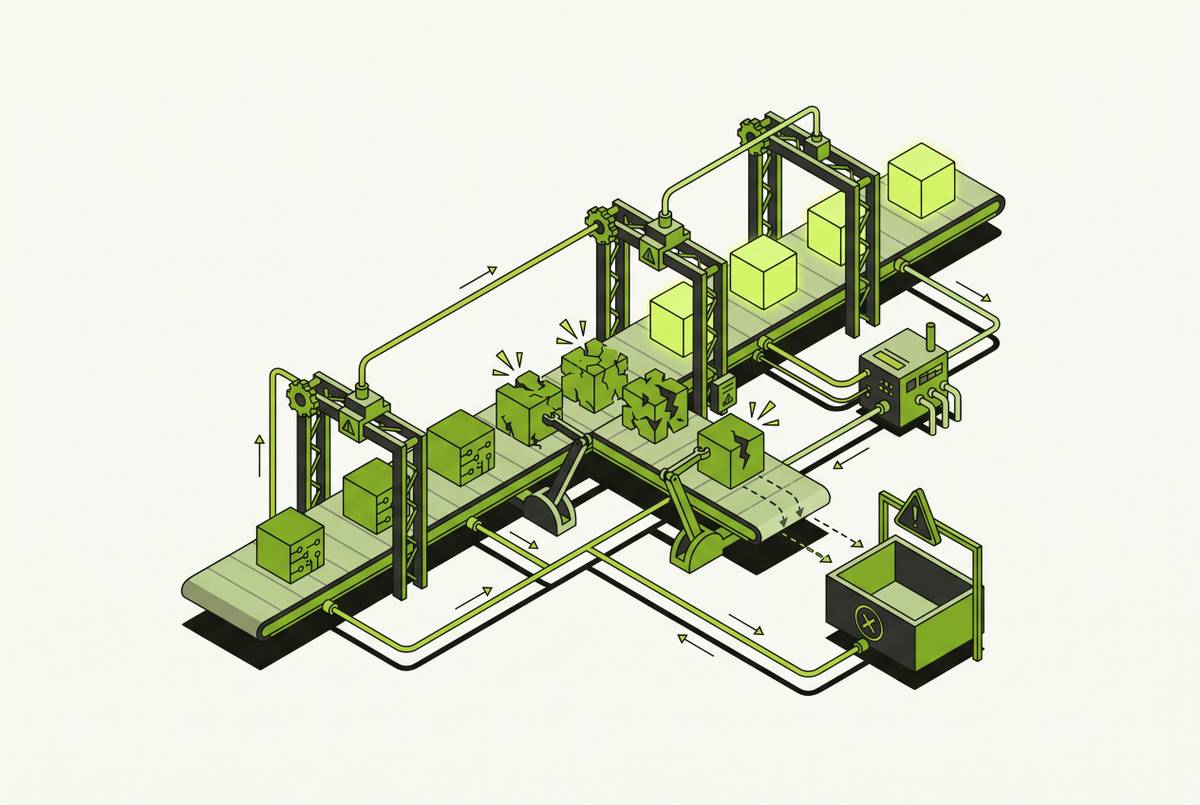
An agent tasked with getting a change merged can treat CI failure as an instruction to try again. It observes failure, pushes another commit or calls the build API, and queues another run. If the same flaky test fails, the sequence repeats. No human interpretation interrupts the loop. Without rate controls, a transient failure can turn this otherwise reasonable task objective into build-queue denial-of-service.
The cost compounds when each attempt reruns compilation, lint, unit tests, and integration tests without short-circuiting at the failure point. Parallel worktrees multiply the demand. Five agents retrying a flaky test simultaneously can fill an executor pool with redundant work. Jenkins’s guidance says that agent-driven development can lead to more changes and build cycles, so pipeline latency becomes harder to overlook. A flake that was tolerable at human commit rates can therefore become a queue blocker.
The failure signal can also misdirect the agent. Infrastructure failure may prompt it to rewrite correct code to address a problem the change did not cause. The resulting history has recognizable symptoms. Queue depth grows monotonically during agent working hours, while the same commit SHA or near-identical diffs recur in build history. High executor utilization paired with low merge throughput completes the diagnosis, with builds consuming capacity but changes failing to land.
Configuring Jenkins triggers to hold up at agent commit velocity
Keep the pipeline definition in a version-controlled Jenkinsfile so that trigger settings and deduplication logic remain reviewable. Combine a short webhook quiet period with the Throttle Concurrent Builds plugin. The quiet period collapses rapid-fire pushes, while throttling caps simultaneous builds per node or agent, or by a parameter such as branch name. These controls serve different purposes. Concurrency limits constrain execution, while the quiet period reduces repeated work entering it.
To stop retry loops, set a cap on the job’s build rate in builds per hour. Branch naming conventions or commit message tags should mark which changes are agent retries and which are new changes that webhook filters should let through. Drop matching retry noise before it enters the queue. For high-risk retries, use the plugin’s approval gate to pause before a tool runs. That checkpoint addresses the agent’s next action rather than merely managing the builds it has already generated.
Agent PR jobs should use filtered webhooks to let through only PR open and update events from agent-owned branches. Main branch validation should follow merge queue completion through an upstream trigger. Scheduled checks need their own cadence. Security scans, dependency audits, and full regression suites should use cron on a schedule that does not depend on agent activity, and the full test and release gates must stay in place before deployment.
Jenkins’s pipeline guidance shows how to run fast-check stages in parallel before the full suite, with failFast true to stop early when a quick check fails. Use that structure for compilation, style, and unit tests. Fast failures shorten the agent’s feedback path. Gate deployment with when { branch 'main' } so that agent branches do not reach privileged environments merely because a webhook, API call, or upstream completion started their build.
Governance controls that prevent agent-triggered pipelines from bypassing security and audit requirements
When triggers fire faster, more changes pass through security boundaries. It does not change the need for those boundaries. A leaked credential, weakened test, or change outside the agent’s intended scope still requires prevention and investigation. Jenkins’s assessment describes access controls, scoped credentials, integration with secret managers such as HashiCorp Vault, and artifact signing. Build records, source control, and provenance tooling connect the change to the agent, pipeline, and resulting artifacts.
The practical governance response is to constrain what each agent can trigger through its permissions. A feature-branch credential should not authorize a deploy job, and untrusted changes from forks or agents without elevated credentials should never reach privileged environments. Agent-generated Jenkinsfile changes also need the same testing and review as application code, because those changes alter the checks and routing on which the audit trail depends.
Human gates remain part of this design. The plugin’s optional approval checkpoint before tool execution reserves review for high-judgment decisions. Most teams still have humans oversee the work, and many keep agents from running fully autonomously. Configuration must therefore support hybrid workflows. Some jobs can run automatically, while others pause where a decision is needed, so the workflow can give different levels of trust to different agent events.
Where the merge queue fits: why trigger configuration alone cannot solve throughput at agent scale
Once triggers admit a clean stream of work, the downstream constraint becomes how quickly validated changes land on main. Build responsiveness does not determine that rate. A merge-group CI run takes time, limiting how many candidates the queue can validate in a day. Agents can produce PRs faster than a reasonably sized CI fleet can validate them at human-era queue depths. A short build-start delay can therefore coexist with a long wait to merge.
Fan-out at the queue level can overwhelm otherwise correct trigger behavior. Each merge event can generate more concurrent validation than the system can process, even without duplicate webhook events. Plaid encountered this when its merge queue used “build everything” mode and new commits arrived every few minutes during peak hours. It could not process all changes in time. Plaid rebuilt the queue with reduced build scope to meet a median latency target, addressing queue mechanics.
Hand off once per logical change to consolidate retries. This gives the queue a deduplicated stream of candidates and eliminates redundant speculative builds. Queue management still requires its own design. An agentic merge queue, where an AI agent handles merge conflicts, CI failures, and queue management while reserving ambiguous decisions for humans, complements agent-paced triggers. The trigger admits the candidate, while the queue determines how and when it can land.
Closing the feedback loop: feeding CI failure signals back into agent workflows
Jenkins’s framing describes build output helping an agent diagnose a failed test and propose another change, with each revision passing through the same defined checks. This supplies an external standard for the agent’s work. A passing build is a concrete, repeatable signal that a probabilistic system cannot produce simply by reasoning about its own code.
To make that feedback usable, post-build steps should structure failure information from logs into payloads. Those payloads should name the stage, build ID, and failure category, and include the part of the log that relates to the failure. Webhook or API callbacks can return them to the agent orchestration layer. Failure classification is the critical boundary here. Transient infrastructure failures should leave the agent’s code logic idle, but genuine test failures should reach it so it can work out the cause and make a targeted fix.
Examining tool calls and the skills exercised after failure can distinguish a productive repair from repeated thrashing on a flaky test. The conversation record becomes evidence about retry quality. Combined with structured build results, it can show whether another attempt addressed the actual cause. The goal is a pipeline that teaches its agents through precise signals and validates their output.